13 October 2026 –
Since opening in 2013, LandWorks has helped almost 300 people leaving prison, or at risk of going to prison, to find a route back into the community and employment through a combination of vocational skills training, practical living support, and counselling.
A ‘Graduate’ is a Trainee who has finished their placement at LandWorks and is living in the community – but, because stopping offending can be a long and uneven journey, LandWorks continues to provide on-going tapered resettlement support tailored to each trainees’ needs.
For some, this may mean an occasional phone call or a visit to LandWorks for a chat; for others, it can involve practical help with housing, benefits or employment, access to mental health support, or support during periods of crisis. In some circumstances, it can even include a return placement.
“Being able to drop in, talk to staff, or access professional support can help to reduce the pressure and anxiety that can accompany resettlement,” explains Project Director Chris Parsons. “Sometimes, simply knowing that there is somewhere to turn can be enough to maintain confidence.”
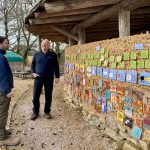
Brad was referred to LandWorks in 2015 on a Community Order. During his time there he helped to build the wood workshop and kitchen, and the cob wall, which records the stories and achievements of all the people who have passed through LandWorks. “There wasn’t anything about it I didn’t like,” he says.
Securing work after graduating was challenging, and in 2022, after reaching a particularly low point, Brad contacted Chris. He was welcomed straight back to LandWorks, receiving practical support with benefits and other issues: “It’s due to the continued support from Chris and the team at LandWorks that I was able to see my way out of a very dark place. They showed me that anyone can make a success of life if they really put effort into it.”
Today, Brad and his partner run their own successful courier business in Devon. They have two young children, and Brad still returns to LandWorks for lunch and to deliver pallets when needed.
This ongoing connection reflects something graduates themselves often describe: a strong sense of belonging to LandWorks that continues long after their placement has ended.
“Even to this day I still see this place as a safe haven,” explains Charlie, another early graduate. “It’s almost like the family I never had … Even now I wonder if I hadn’t come here how different would life be… I’m still coming out here after eight years. If you said like 10 years ago, would I still be here… no, don’t be stupid, I’ve done it, I’m finished, that’s it, end of … but no, I love coming out here still.”
From LandWorks into employment
A key goal of LandWorks is to find employment for our graduates as research shows that having a job is a crucial factor in successful resettlement. Some 93% of former trainees seeking employment are in work, while fewer than 6% go on to reoffend within a year.
From the very beginning we have been fortunate to partner with local employers who believe in our vision, and who are willing to give people with criminal records a chance. Numerous trainees have gone on to work for Riverford Organic Farmers, Dartington Estate, various construction firms and more.
Having a job not only provides an income but also routine, purpose, responsibility, social connection and a sense of identity beyond the criminal justice system.
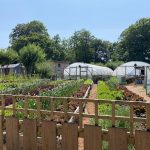
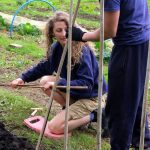
LandWorks gives trainees the opportunity to develop practical workplace experience in areas including the market garden, pottery, wood workshop, and kitchen. Alongside vocational skills, trainees develop qualities such as reliability, teamwork, creativity, communication, and mutual support. For some, the experience opens the door to careers and interests they had never previously imagined.
Sam’s journey is one example. Having left prison in April 2022 with “no hope or ambition”, he began at LandWorks the following month as a trainee. Working in the market garden sparked an unexpected passion for horticulture. “Before I embarked on my journey in the world of horticulture, I hadn’t known much about plants other than how to smoke them!”
By August 2024, Sam had progressed from trainee to employee, working three days a week as a Market Garden Assistant while studying for a Royal Horticultural Society Level 2 qualification in Plant Development and Growth and undertaking a course in regenerative farming. “LandWorks has been the best thing that could have happened to me,” says Sam. “It took me away from my past and supported me to work on my present self, for a better future.”
Other graduates have gone on to build careers in which their own experiences have become an important part of the work they do. Steph is now a Support, Time and Recovery Worker with the NHS Criminal Justice Liaison and Diversion Service in Devon. Darrell, who has worked with NHS Reconnect as a peer support worker for five years, supports people coming out of the prison system and has been recognised with a Silver Award for outstanding work. Lucy who came to LandWorks as she was entering recovery is now a Peer Worker with NHS Shrublands, supporting people with drug and alcohol recovery.
Meanwhile, Joshua recently contacted LandWorks to share that he had taken on a council allotment and, inspired by the principles he had experienced at LandWorks, established a workgroup for other people in recovery.
Nurturing a cycle of support
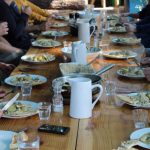
As they forge their new lives outside the criminal justice system, many graduates regularly return to the site, dropping in for lunch or tea, attending our annual Supporter’s Day and other charity fundraisers. Their presence offers practical encouragement, but it also provides something more fundamental – visible evidence that change is possible.
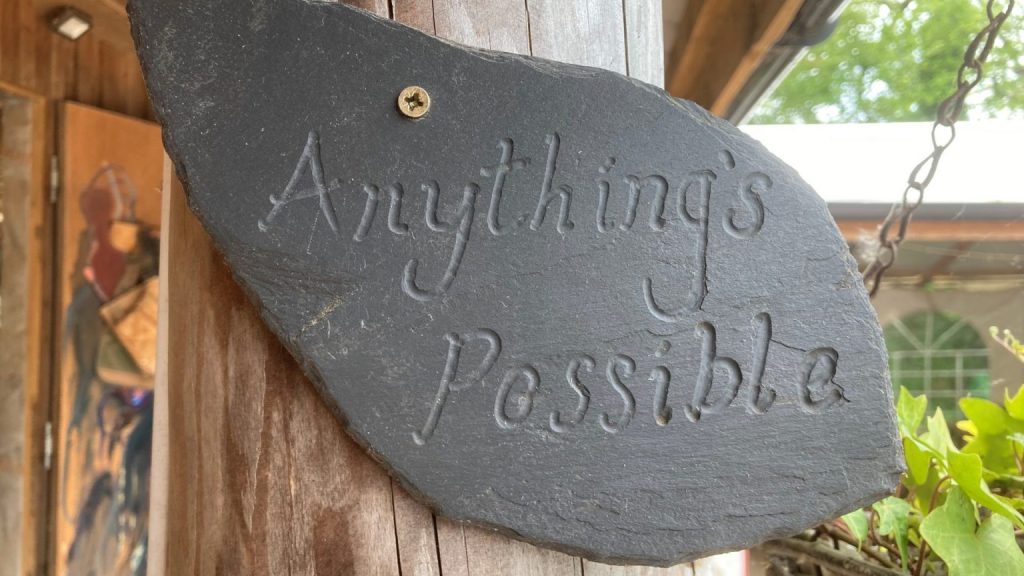
For someone still in the middle of their own journey, seeing a former trainee return as an employee, peer worker, proud dad, or simply as someone who is doing well can make an otherwise uncertain future feel tangible.
As KJ, a current trainee, puts it: “It makes me quite happy to see that people have sorted themselves out. It just proves that this place works dunnit. I’d like to be one of them people one day.”
Graduates can offer something particularly valuable because they have been through similar experiences themselves. “They can guide you coz they’ve been through it all. They’ve got more experience in life,” explains trainee Clive.
The importance of lived experience
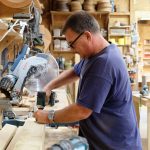
Graham was one of LandWorks’ first trainees and became the charity’s first graduate employee in 2016. He recently celebrated ten years as Wood Workshop Manager with the charity.
Graham knows what it is like to arrive at LandWorks uncertain about the future because he has lived it himself. He understands the challenges of leaving prison, rebuilding a life, and learning to trust again. His personal experience gives him a credibility that cannot be replicated through professional training alone, making him a powerful mentor and inspiration to new trainees.
“What I found when I came here from prison was something I hadn’t experienced in years. A place that treated me like a person. LandWorks was the first professional service in four and a half years to ask me how I was and what they could do to help. That really stuck with me, and I started believing there may be a future after prison.”
That experience of being listened to and treated as an individual has shaped Graham’s own approach to supporting trainees. He has now spent a decade watching new trainees arrive at LandWorks nervous, uncertain, and often questioning whether they deserve a second chance. He has also watched those same people grow into confident, capable, and self-respecting individuals.
And, importantly, Graham continues to feel supported himself. “Even now, ten years on, I too still feel supported. That matters more than people realise, to know you’ve got someone who sees your potential and wants you to succeed.”